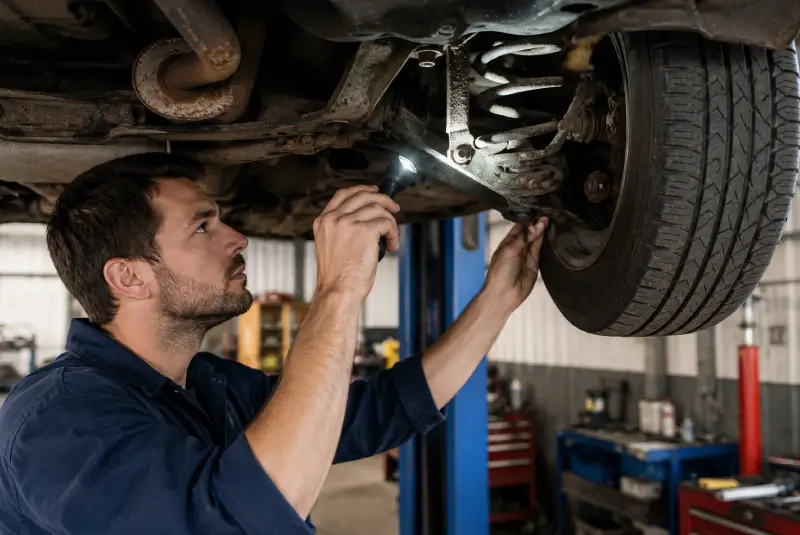
Tyres
Tyres are one of the most common fails. They need enough tread (the minimum was raised to 1.5 mm under Queensland's 2026 update), and they can't have damage like cracks, bulges or exposed cord. Check all four, and the spare where it applies. Uneven wear can also point to a suspension or alignment issue.
Lights
Blown globes, cracked lenses, and lights that don't work are easy fails and easy fixes. Walk around the car and check headlights, brake lights, indicators, reversing lights and number-plate lights. Queensland's 2026 update also tightened some lighting brightness requirements.
Brakes
Worn pads, scored rotors, or brakes that don't perform evenly will fail. If your brakes squeal, grind or feel down, get them sorted before the inspection. See our brake repair page.
Windscreen and wipers
A cracked windscreen, especially in the driver's line of sight, is a common fail. So are worn wiper blades that don't clear the glass. Both are inexpensive to address.
Suspension and steering
Worn shocks, ball joints, bushes or steering components will fail, and they often show up as clunks, a bouncy ride, or uneven tyre wear. These are safety-critical, so inspectors look closely.
Other common ones
- Oil or fluid leaks
- Worn or damaged seatbelts
- Rust in structural areas
- Exhaust leaks or excessive smoke
How to avoid a fail
The simplest way to pass first time is to have a mechanic check the car before the inspection, or choose an inspector who can fix minor fails on the spot. Because we're a mobile mechanic and inspection service, we can often sort small items and complete the certificate in one visit, rather than sending you off to fix things and come back.