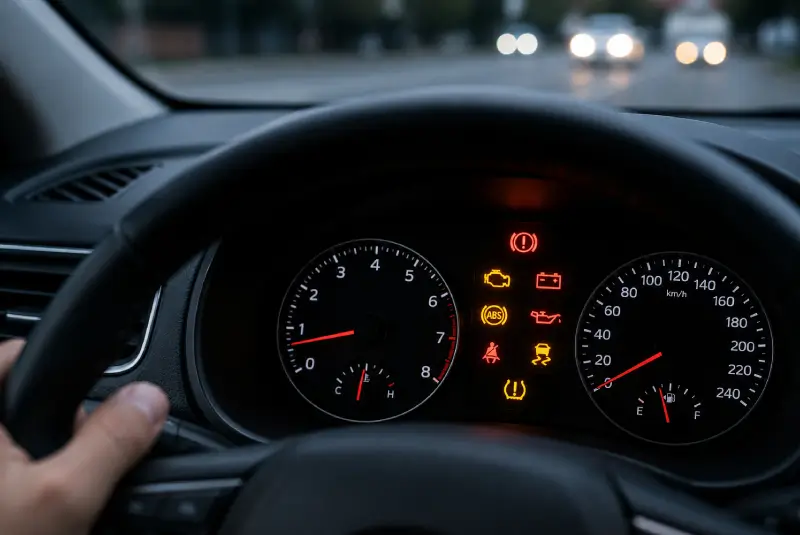
Red lights: act now
Red generally means a serious issue. Don't keep driving without checking.
- Oil pressure (oil can symbol): low oil pressure can destroy an engine quickly. Stop as soon as it's safe and call for help.
- Temperature (thermometer): the engine is overheating. Stop and let it cool, driving on risks major damage.
- Battery/charging: the charging system has a fault. The car may soon lose electrical power. Get it checked promptly.
- Brake warning: can mean low brake fluid, worn pads or a fault. Treat brakes as urgent.
Amber/yellow lights: check soon
Amber usually means a fault the car wants looked at, but not always an immediate stop.
- Check engine light: the broad one. It covers many faults, from minor to significant. A scan reads the code so you know which. If it's flashing, that's more urgent, ease off and get it checked.
- ABS: the anti-lock braking system has a fault. Your normal brakes still work, but get it checked.
- Tyre pressure (TPMS): low pressure in one or more tyres. Check and inflate them.
- Traction/stability control: often lights up in the wet, but if it stays on, have it checked.
What a light actually is
A warning light is the car's computer flagging that a sensor has detected something outside normal. The light itself doesn't tell you the exact cause, the fault code behind it does. That's why a diagnostic scan is the proper first step, not guessing or just clearing the light.
Why clearing the light isn't a fix
Some people reset the light and hope. If the underlying fault is still there, the light comes back, because the computer sees the problem again. Clearing it without fixing the cause solves nothing.
What to do when a light comes on
- Note the colour, red is more urgent than amber.
- For red oil or temperature lights, stop safely and don't drive on.
- For amber lights, you can usually drive gently to a safe place, then get it scanned.
- If you're unsure, call a mechanic and describe the light.