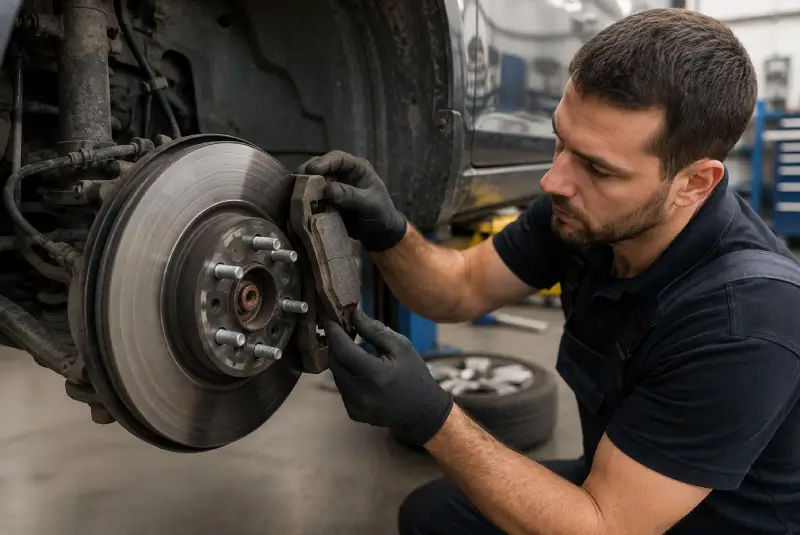
1. Squealing when you brake
A high-pitched squeal is often the wear indicator, a small metal tab that's designed to make noise when the pads get low. It's telling you the pads are near the end. Book a check before it becomes the next sign on this list.
2. Grinding
A harsh grinding usually means the pads are gone and metal is now on metal. At this point you're likely damaging the rotors too, which turns a pad job into a pad and rotor job. Don't keep driving on grinding brakes.
3. A pulsing or vibrating pedal
If the brake pedal pulses or the car shudders when you brake, the rotors may be warped. It's worth checking, since warped rotors reduce braking performance.
4. Longer stopping distances
If the car takes longer to pull up than it used to, or the pedal feels different, the braking system needs a look. Reduced stopping power is a safety issue, plain and simple.
5. The car pulls to one side
If the car drifts left or right under braking, one side may be wearing unevenly or a caliper may be sticking. Uneven braking is dangerous and worth sorting quickly.
6. A soft or spongy pedal
A pedal that sinks or feels soft can point to a brake fluid or hydraulic issue, including air or a leak in the system. This one deserves prompt attention.
7. The brake warning light
If a brake warning light comes on, don't ignore it. It can mean low brake fluid, worn pads, or a fault in the system. Get it checked.
Don't wait it out
Brakes give plenty of warning before they fail, which is the good news. The trap is ignoring the early signs until a cheap pad replacement becomes rotors, calipers and more. If you've noticed any of these, book a brake check, we come to you and show you exactly what's worn.